

India’s power sector is entering a decisive phase. With renewable integration, smart grids, EV charging infrastructure, and large-scale industrial expansion all accelerating at once, electrical reliability is no longer optional—it is foundational. At the center of this transformation stands every dependable transformer manufacturing company in India, translating generation capacity into usable, stable power across cities, industries, and rural networks. As we look toward 2026, understanding how to evaluate transformer manufacturers is becoming a strategic priority for utilities, EPC contractors, and procurement managers.
Why a Transformer Manufacturing Company in India Matters in 2026
India’s installed power capacity continues to grow, but the real challenge lies in efficient transmission and distribution. Loss reduction, voltage regulation, and grid resilience depend heavily on transformer design quality. A modern transformer manufacturing company in India is no longer just assembling equipment; it is engineering solutions around CRGO steel optimization, low no-load losses, and thermal stability under fluctuating loads. With stricter BIS norms and higher efficiency expectations, transformer selection directly impacts long-term operating costs.
Deep Dive into Distribution Transformers and Grid Expansion
One of the biggest growth drivers in the sector is distribution infrastructure. Government-backed schemes, rural electrification, and smart city projects have created sustained demand for distribution transformer manufacturers in India. These transformers must handle variable loading, frequent switching, and harsh environmental conditions without compromising performance.
Design parameters such as core lamination quality, copper or aluminum winding selection, and ONAN cooling efficiency play a critical role. A capable transformer manufacturing company in India understands how to balance KVA ratings with real-world operating conditions, ensuring stable output at the last mile. This is especially critical as rooftop solar and decentralized generation add reverse power flow challenges to the grid.
The Pune Advantage: Engineering Depth and Manufacturing Discipline
When buyers search for a transformers manufacturer in Pune, they are often looking for more than proximity. Pune has evolved into a strong electrical and industrial engineering ecosystem, supported by skilled manpower, vendor networks, and testing infrastructure. Many reputed transformer manufacturers in Pune follow disciplined manufacturing practices rooted in automotive-grade quality systems.
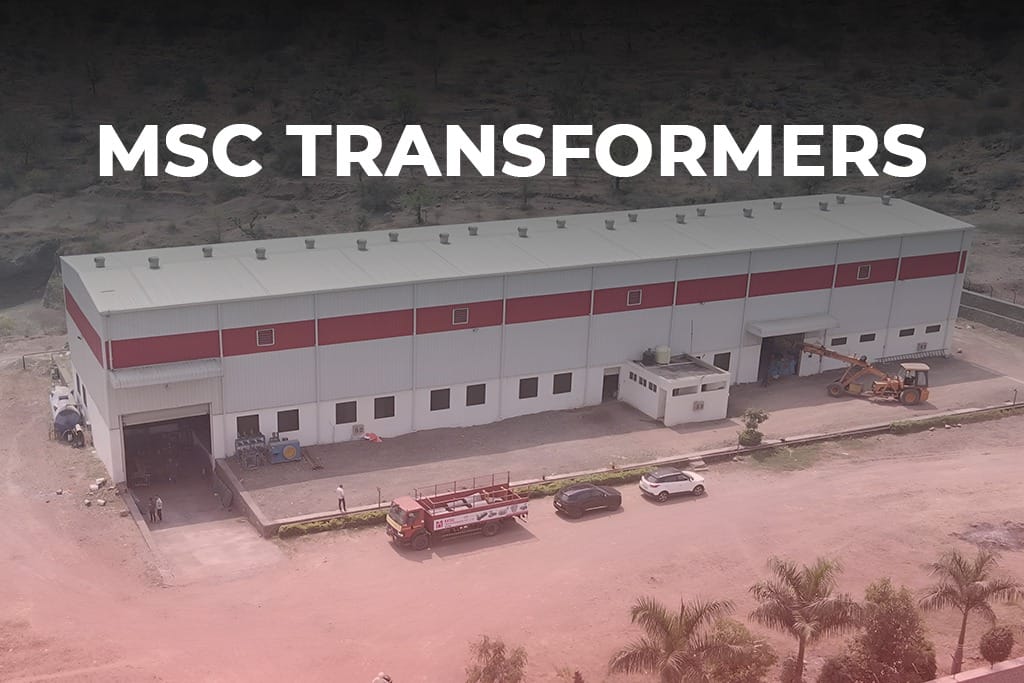
MSC Transformers stands out in this environment as a trusted transformer manufacturer with a clear focus on engineering precision. From distribution transformers to oil-cooled power transformers up to 5000 KVA, MSC Transformers combines robust design with consistent production quality. For buyers evaluating a transformer manufacturing company in India, Pune-based expertise often translates into shorter development cycles and better after-sales technical support.
MSC Transformers: Built for Modern Power Applications
What differentiates MSC Transformers is its ability to engineer for application-specific requirements. Beyond standard distribution units, the company manufactures solar inverter duty transformers designed to handle harmonics and voltage fluctuations common in renewable installations. Furnace transformers, another specialized offering, are built to withstand high thermal and mechanical stress under continuous industrial loads.
As a transformer manufacturing company in India, MSC Transformers emphasizes low-loss core design using high-grade CRGO steel, precision winding techniques, and rigorous routine and type testing. These capabilities are particularly valuable for EPC firms and utilities looking to future-proof their assets against evolving grid demands.
Choosing the Right Manufacturing Partner: What Engineers Should Check
Selecting a transformer supplier should never be based on price alone. Engineers and procurement teams should evaluate a transformer manufacturer on several technical and compliance parameters. BIS certification, ISO 9001 quality systems, and documented testing protocols are baseline requirements.
Equally important is the manufacturer’s ability to customize. Load profiles, ambient temperature, installation conditions, and efficiency targets vary across projects. A competent transformer manufacturing company in India will offer design validation, loss calculations, and thermal modeling rather than a one-size-fits-all product. This consultative approach reduces lifecycle costs and improves operational reliability.
Market Outlook: What 2026 Demands from Manufacturers
By 2026, transformers will be expected to do more with less—lower losses, smaller footprints, and higher reliability. Digital monitoring, improved insulation systems, and compatibility with renewable-heavy grids will become standard expectations. This shift favors manufacturers who invest in R&D and process control rather than volume-only production.
In this evolving landscape, a forward-looking transformer manufacturing company in India must align manufacturing excellence with application engineering. Companies like MSC Transformers, with experience across utility, industrial, and renewable sectors, are well positioned to meet these demands.
Partner with Experience, Not Just Capacity
The transformer you select today will define your power system’s performance for decades. As India’s grid becomes more complex, working with a proven transformer manufacturing company in India is a strategic decision, not a transactional one. MSC Transformers combines Pune’s engineering strengths with deep application knowledge across distribution, power, solar, and furnace transformers.
If you are planning projects for 2026 and beyond, now is the time to consult with MSC Transformers and align your power infrastructure with a partner that understands both today’s requirements and tomorrow’s challenges.