
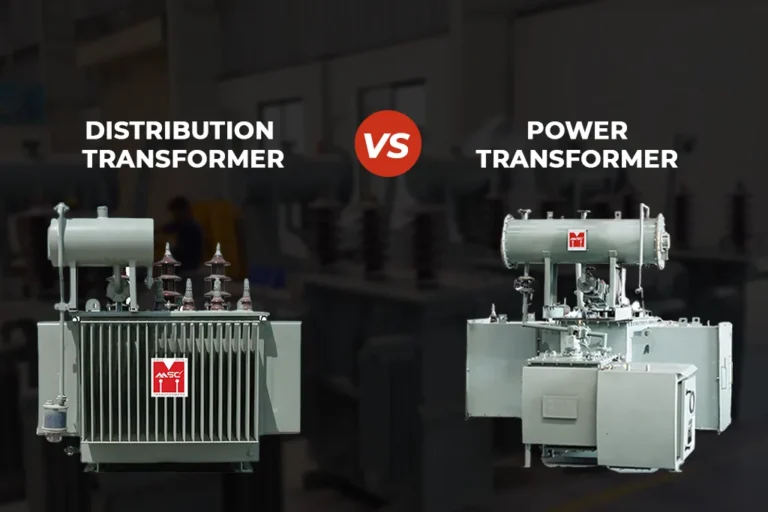
The growing power infrastructure sector in India has significantly increased the demand for efficient transformer systems. Industries, commercial facilities, power plants, and utility providers all rely on transformers for safe and reliable electricity distribution. However, many people still do not fully understand the difference between power transformers and distribution transformers.
Understanding this difference is important when selecting the right transformer solution for industrial or commercial applications. Today, both distribution transformer manufacturers in India and power transformer manufacturers play a critical role in supporting the country’s rapidly expanding energy infrastructure.
From renewable energy projects and smart grids to industrial manufacturing plants and urban power distribution systems, transformers are the backbone of modern electricity networks.
In this blog, we will explain the major differences between power transformers and distribution transformers, their applications, working principles, and why choosing the right transformer manufacturer is essential for long-term operational efficiency.
What Is a Power Transformer?
A power transformer is used mainly in power generation and transmission networks. These transformers are designed to transfer electrical energy between circuits at high voltage levels.
Power transformers are commonly installed:
- At power generation stations
- In transmission substations
- In large industrial facilities
- In high-voltage transmission systems
The primary function of a power transformer is to increase or decrease voltage levels for efficient long-distance electricity transmission.
Modern power transformer manufacturers India are developing highly efficient transformers capable of handling large power loads with minimal transmission losses.
What Is a Distribution Transformer?
A distribution transformer is used in the final stage of electricity distribution.
These transformers are commonly installed:
- Near residential areas
- Commercial buildings
- Small industries
- Urban power distribution systems
- Rural electricity networks
The main role of a distribution transformer is to reduce transmission voltage to a usable level for consumers.
Leading distribution transformer manufacturers in India design transformers specifically optimized for continuous operation and energy efficiency at lower voltage levels.
Major Difference Between Power Transformer and Distribution Transformer
Although both transformers perform voltage conversion, they differ significantly in:
- Voltage handling
- Capacity
- Application
- Efficiency
- Installation location
- Operating conditions
Let’s understand these differences in detail.
Difference in Voltage Levels
One of the biggest differences is voltage capacity.
Power Transformers
Power transformers operate at very high voltage levels, typically above 33kV.
They are used for:
- Power transmission
- Grid connectivity
- Large industrial applications
Distribution Transformers
Distribution transformers operate at lower voltage levels, generally below 33kV.
They are mainly used for:
- Local electricity distribution
- Residential supply
- Commercial power systems
This is why industries choose experienced transformer manufacturers based on specific voltage and operational requirements.
Difference in Application
The application area of each transformer is completely different.
Power Transformers Applications
- Transmission networks
- Thermal power plants
- Renewable energy projects
- Large manufacturing industries
- Smart grid infrastructure
Distribution Transformers Applications
- Residential colonies
- Commercial buildings
- Small industries
- Public utility systems
- Urban and rural power distribution
Today, many transformer suppliers in India offer customized solutions depending on industrial and infrastructure requirements.
Difference in Load Handling Capacity
Power transformers are designed to handle extremely high electrical loads.
They are suitable for:
- Heavy industrial operations
- Utility-scale electricity transmission
- Large infrastructure projects
Distribution transformers handle relatively smaller loads and provide stable voltage for end users.
This operational difference directly impacts transformer design, insulation systems, and cooling methods.
Difference in Efficiency
Efficiency characteristics also differ significantly.
Power Transformers
Power transformers are designed for maximum efficiency at full load conditions.
Since transmission systems often operate near full capacity, minimizing energy loss becomes extremely important.
Distribution Transformers
Distribution transformers operate continuously throughout the day with varying load conditions.
Therefore, they are designed for:
- Better all-day efficiency
- Reduced no-load losses
- Continuous power distribution
Modern distribution transformer manufacturers focus heavily on energy-efficient designs to support sustainable power systems.
Difference in Cooling Systems
Cooling systems vary depending on transformer size and application.
Power Transformers
Common cooling systems include:
- Oil-cooled systems
- Forced air cooling
- Water cooling systems
These systems help manage high operating temperatures during heavy load conditions.
Distribution Transformers
Distribution transformers generally use:
- Oil natural air natural cooling
- Simple air cooling methods
The cooling requirement is lower because operating loads are comparatively smaller.
Difference in Installation Location
Installation locations also differ significantly.
Power Transformers
Installed at:
- Generation stations
- Transmission substations
- Industrial plants
Distribution Transformers
Installed near:
- Residential areas
- Commercial zones
- Utility poles
- Local substations
This placement difference reflects their role in the power distribution chain.
Difference in Cost and Size
Power transformers are:
- Larger in size
- More expensive
- Technically complex
Distribution transformers are:
- Smaller
- More economical
- Easier to install and maintain
Choosing the correct transformer depends entirely on power requirements and operational applications.
Importance of Choosing the Right Transformer Manufacturer
Selecting the right transformer manufacturer is critical for:
- Operational reliability
- Energy efficiency
- Long-term performance
- Safety standards
- Maintenance costs
Experienced transformer manufacturing company in India operations focus on:
- High-quality materials
- Advanced manufacturing processes
- Efficient testing systems
- Industry compliance standards
Companies like MSC Transformers understand the growing industrial demand for reliable and efficient transformer systems across multiple sectors.
Growing Demand for Transformers in India
India’s infrastructure and industrial sectors are expanding rapidly due to:
- Smart city development
- Renewable energy projects
- EV infrastructure growth
- Industrial automation
- Urbanization
This growth is increasing demand for:
- Power transformers
- Distribution transformers
- Industrial transformers
- Smart transformer systems
According to the Ministry of Power, Government of India, India continues to invest heavily in upgrading power transmission and distribution infrastructure.
This creates significant opportunities for both power transformer manufacturers and distribution transformer manufacturers in India.
Future of Transformer Manufacturing in India
The future of transformer manufacturing in India looks highly promising.
Emerging technologies such as:
- Smart grids
- IoT monitoring
- Predictive maintenance
- Renewable energy integration
- AI-powered diagnostics
are transforming the transformer industry.
Modern transformer manufacturers are increasingly investing in:
- Automation
- Energy-efficient systems
- Smart transformer technologies
- Sustainable manufacturing
Businesses are now looking for transformer suppliers in India capable of delivering technologically advanced and future-ready solutions.
Conclusion
Understanding the difference between power transformers and distribution transformers is essential for selecting the right power solution.
While power transformers are designed for high-voltage transmission systems, distribution transformers are responsible for delivering electricity safely to end users.
Both play a crucial role in India’s rapidly growing power infrastructure sector.
As industries continue expanding and electricity demand rises, experienced distribution transformer manufacturers in India and power transformer manufacturers will remain essential for supporting reliable and efficient energy distribution systems.
Companies like MSC Transformers continue contributing to India’s growing industrial and infrastructure development by providing advanced transformer solutions designed for modern power requirements.
Frequently Asked Questions
Power transformers are used in high-voltage transmission systems, while distribution transformers are used for delivering electricity to end users at lower voltage levels.
Power transformers are commonly used in transmission substations, power plants, and large industrial facilities.
A distribution transformer reduces transmission voltage to a safe and usable level for residential, commercial, and industrial consumers.
Efficient transformers reduce energy losses, improve operational performance, and lower electricity costs.
Experienced transformer manufacturers provide reliable products, advanced technologies, better safety standards, and long-term operational efficiency.